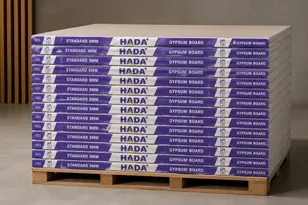
Board thickness is one of the first decisions on any ceiling or drywall job, and it affects weight, stiffness and how the finished surface performs. Polad Trading supplies gypsum board in 9mm and 12mm.
Here is how to choose between them, and where each one makes the most sense.
The short answer
Use 9mm gypsum board for most ceilings, where lighter weight makes fixing overhead easier and the board does not take knocks. Use 12mm gypsum board for wall partitions, wall linings and any surface that needs to feel solid or resist impact.
Where 9mm gypsum board works best
A 9mm board is lighter, which matters when you are lifting boards above your head and fixing them to a ceiling grid. Lighter boards also put less load on the suspension system.
Ceilings in homes, offices and shops
Bulkheads and decorative ceiling features
Where 12mm gypsum board works best
A 12mm board is stiffer, so it feels less hollow when tapped and stands up better to everyday knocks. It also gives better sound reduction between rooms than a thinner board on the same frame.
Drywall partitions between rooms and offices
Wall linings
Corridors and busy commercial spaces
What about kitchens and bathrooms?
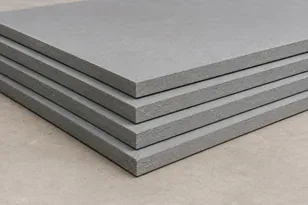
In humid rooms the core of a standard board can absorb moisture and sag or stain. For bathrooms, kitchens and laundries use 12mm moisture resistant board. For areas that get wet directly, cement fibre board is the safer choice.
Getting the frame right
Whichever board you choose, it needs a properly spaced frame. Polad Trading supplies GI F channel, GI C channel, GI wall angles, PVC wall angles and 6mm wall angles, plus board screws and black board screws to fix the boards. Check the recommended frame spacing for your board before you start.